API quota exceeded. You can make 500 requests per day.
A fence is among those tasks people discover everyday, even when they quit thinking of it. You see it when you pull right into the driveway, when kids run past the gate, when wind presses on the panels, when spring drainage transforms the ground right into a mix of mud and standing water. The distinction in affordable fence installer between a fence that lasts and one that comes to be a repeating repair service cost frequently boils down to procedure. Not just materials, not just "good installers," but exactly how the work is planned, determined, developed, and inspected.
When you're looking for the very best fencing contractors or the best fencing company for your lawn, the installment process is where you can actually confirm competence. An excellent crew doesn't simply appear with a truck and a handful of posts. They turn up with a plan, and they comply with that plan with enough technique that the finished fencing holds positioning, withstands the neighborhood climate, and drains water the means it should.
Below is a step-by-step check out a strong fencing firm installment procedure, created from the point of view of how reliable best fencing installers usually run a work. I'll likewise point out the trade-offs and decisions you'll likely encounter, since great secure fencing is as much judgment as it is measurement.
Step 1: The site walkthrough, not the sales pitch
The initially genuine checkpoint happens prior to anybody touches a message opening. A specialist group starts with a stroll of the residential or commercial property and treats it like a real website study instead of a fast aesthetic estimate.
They'll consider:
- where the fence line actually is, including corners, jogs, and any type of blockages like mature trees
- how the ground transitions, especially if you have slopes, reduced places, or areas where water rests after rain
- gate places and how they will turn without striking lorries, hedges, or fences on surrounding property
- existing conditions, such as old fencing footings, hidden lines, or prior repairs that transformed the ground
If you're planning to change an older fencing, this step is a lot more crucial. I have actually seen "simple elimination and mount" come to be made complex since old articles were set in concrete that split and heaved gradually. A good team will understand just how to evaluate whether those residues can be left safely, whether they require to be gotten rid of, and just how they'll take care of uneven ground along the line.
This stage also responds to a quieter concern: just how much gain access to does the staff actually have? If your gateway is narrow, if the driveway is high, or if you have a backyard with only one practical access point, logistics can affect whatever downstream, from devices selection to how they protect landscaping.
Step 2: Validate the design, borders, and permissions
Fence lines are straightforward till they aren't. A best fencing company setup procedure typically consists of a border confirmation step, especially when there are disputes, uncommon whole lot lines, or a fencing that needs to follow setbacks.
You might be dealing with:
- recorded residential or commercial property lines versus "what everyone presumed" in the neighborhood
- easements for utilities or drainage that restrict where a fence can be built
- municipal setback requirements, which can differ even within the very same more comprehensive area
A qualified installer will certainly inquire about these concerns early and will certainly be cautious regarding placing fence edges. They ought to want to clarify just how they are developing the line you'll in fact obtain, and what occurs if the final placement must change because of documented borders or field conditions.
If your job entails a gate opening that needs placement with a driveway, pathway, or existing framework, this is also where they'll prepare for geometry. Fence lines that run "close adequate" often tend to develop gateway issues fast, since gateways desire straight runs and constant blog post spacing to run smoothly.
Step 3: Step and mark article places with genuine accuracy
Once limits and format are agreed, the following step is noting. This is where you can divide quick quotes from build-ready plans.
Professional teams measure multiple times, then mark. They consider:
- post spacing based upon fencing type and wind exposure
- corner strength needs, which often require thicker blog posts or extra bracing
- terrain, since an incline can alter just how you set line quality and maintain panels uniform
- gate articles, which require support and should be set with more care than standard line posts
A typical error I've seen is treating every message spacing the same. Actually, corners and gate areas act like tension points. If you do not make up that, you could obtain a fence that looks fine on the first day yet starts to rack, sag, or pull out after the initial season of heavy wind.
Good installers will likewise flag any kind of areas where the fencing line will certainly need special delivery. That may be a near-root location, a spot that drains poorly, or a low area where frost heave or settlement might become an issue.
Step 4: Prepare for utilities and call-backs prior to digging
Digging without utility confirmation is an avoidable risk. In numerous places, there are official processes for situating below ground lines, and reliable teams will certainly demand compliance. Even when a homeowner has currently called, the staff needs to verify that marked locations make sense about the fence line.
This is additionally where teams consider exactly how they'll handle unanticipated findings. If they hit something throughout excavating, the right reaction is to stop, reassess, and coordinate as opposed to "work around it" in ways that create future failure points.
You can expect an expert team to treat this action as non-negotiable. It does not have to be significant, but it must be structured.
Step 5: Soil evaluation and choosing the appropriate structure approach
The fence foundation is where products and labor meet fact. The best fencing contractors don't presume every yard has the same soil behavior.
They will look at dirt type, density, and dampness habits. Is the ground sandy and fast-draining, or is it clay-like and prone to expansion and contraction? Does the area hold water? Does it soften in springtime? Exist indications of previous resolving around old posts?
From a procedure viewpoint, this influences:
- post hole deepness and diameter
- whether messages are set in concrete or set up with different approaches matched to conditions
- how they take care of backfill and compaction
- how they establish line and elevation, especially where the fencing adheres to a slope
There's no solitary "universal" policy for all yards. A high-wind location on reactive clay with freeze-thaw cycles demands different selections than a well-drained yard in a milder environment. If someone tells you they constantly use the same deepness and the same mix, regardless of site problems, it's a red flag.
Step 6: Post openings, straightness checks, and consistent placement
Now you lastly see progression. A crew digs the message openings, then sets blog posts. This appears basic, but it's an accuracy task.
The best fencing installers concentrate on straightness and repeatability:
- posts need to be plumb, not simply "close"
- post elevation has to match an organized line quality, particularly if the fencing follows irregular ground
- corners and finish articles are established with additional attention because they determine the entire placement of the fence run
- braces and short-term supports may be made use of to hold articles while concrete treatments or while the fencing is built
If concrete belongs to the foundation plan, a trusted process consists of proper settling time before rails and panels take place. Hurrying this stage is among the most convenient ways to develop misalignment. I have actually enjoyed staffs try to "scoot" and wind up with articles that shift somewhat throughout healing, which later on turns up as uneven spacing or a fencing line that looks subtly off.
Also take note of the cleanup routines during digging. Excellent staffs manage particles and safeguard neighboring landscape design, particularly if you have turf that will be replanted or restored.
Step 7: Bed rails, stress, and panel alignment
Once blog posts are correctly set, the fence system collaborates. The sequence here matters. The majority of fencing styles depend upon rail installment to lock in spacing and decrease panel sag.
In wood fencing, the work often goes panel by panel, but rails and bracing still define the straightness and the final aesthetic line. In metal or vinyl systems, placement is even more important due to the fact that the panels or pickets lock visually, and any type of message deviation ends up being noticeable.
A solid installment procedure consists of:
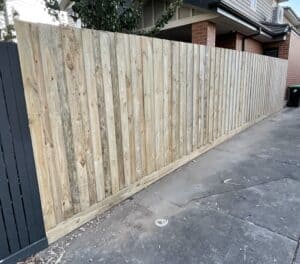
- verification that edge and gate articles continue to be straightened after rail attachment
- checking each run for consistent spacing, not simply "ordinary" spacing
- managing exactly how sections satisfy at corners so you do not obtain unpleasant spaces or mismatched angles
Here's a useful compromise I've seen: some people focus on tight visual uniformity along uneven ground, while others focus on a fencing that drains water much better. If your fencing line goes across an incline, you may have to decide whether to step the fence with the surface, use racking alternatives, or produce a consistent height account by grading. Each option adjustments just how the fencing looks and how it deals with wetness and wind loads.
An expert team will discuss these alternatives prior to build-out, so you're not amazed when the fence is finished.
Step 8: Gates, hardware, and practical clearance
A fence entrance must work smoothly. That indicates it can not be dealt with as an afterthought.
Gate installment consists of preparing for:
- hinge-side positioning so the gate doesn't bind
- latch positioning that matches the remainder of the fencing height and picket spacing
- clearance for motion, consisting of seasonal expansion or small dirt movement
- reliable reinforcement at gate posts, since gateways apply constant leverage compared to basic fence panels
The best fencing company refines treat entrances like their very own mini task. Even when the main fence is advancing gradually, gateway work usually requires additional checks: does the gate close flush, does it swing without scuffing, does it stay square as the hardware tightens?
I have actually seen high-quality fence products fall short simply since an entrance post was mounted with much less attention than the remainder. If the gate wobbles or drags, people typically criticize the joint brand name. More often, the origin is setup geometry.
Step 9: Fit and coating, trimming, and protecting surfaces
Once the architectural build is complete, staffs relocate into surface job. This includes trimming, fastening patterns, and surface area protection, depending on fence type.
For wood, this is where discoloration or sealing decisions issue. If a fencing is revealed to sun and dampness, the coating is not just aesthetic. It becomes part of the long life equation. An expert installer will typically clarify timing, such as when to use stain after installment so you're not capturing dampness in wood that hasn't stabilized.
For steel fencing, it's common to look for finishing stability around cut sides and bolts. For plastic, the surface action usually focuses on guaranteeing panels are seated appropriately and attached where called for, without over-tightening.
Also notice exactly how they deal with ends and shifts. A good fencing does not simply finish suddenly. It wraps around edges easily, aligns with articles, and deals with termination points so water does not funnel right into spots where it can weaken materials.
Step 10: Cleaning, particles elimination, and final line verification
A professional develop ends where the next-door neighbor starts to discover. That indicates cleanup is part of quality control.
After the fencing is installed, the team must:
- remove excess debris, including wood scraps, metal offcuts, and concrete remnants if used
- ensure gate locations and accessibility points are clear
- verify the fencing line aesthetically and by dimension, searching for out-of-plane areas or obvious elevation mismatches
Final verification is likewise where they must deal with small adjustments, like tightening fasteners or fixing a panel that rests slightly off.
If you have landscaping along the fencing line, this phase is where you'll commonly see the difference between an ordinary experience and a mindful one. Some teams safeguard turf and hedges, others bulldoze through and "hope it recuperates." With a high quality business, you ought to anticipate real care.
A sensible list you can utilize during installation
If you want an easy way to track whether the procedure is being followed, here's a short list you can use onsite or during vital milestones.
- Utility marks and excavating safety validated before any type of openings are dug
- Fence line design agreed and plainly noted before message holes start
- Corner and gateway blog posts established with additional reinforcement and extra placement checks
- Posts are plumb and the elevation line is consistent, specifically across the slope
- Final gate operation looked for smooth closure and right lock placement
This isn't concerning catching every error. It has to do with catching patterns that typically indicate difficulty later, like poor design technique or hurried structure work.
Step 11: Post-install care, service warranty assumptions, and maintenance reality
Even the very best mounted fencing needs sensible upkeep. The installment procedure need to include advice on what to do next and what not to do.
For timber fencings, maintenance may include periodic staining or securing, particularly after the initial period. For steel, you'll likely intend to look for scrapes or layer damage and touch up as required. For vinyl, maintenance is usually reduced, but cleaning and examination still matter.
A solid business also offers clear service warranty assumptions. You must be informed what is covered, what isn't, and for how long. Beware with guarantees that are unclear or that shift responsibility totally to the house owner without clear reasoning.
One refined concern is just how service warranties handle "typical motion" in soil. All backyards move somewhat gradually, especially with freeze-thaw cycles or heavy rainfall. The secret is whether the fencing is constructed with that said fact in mind from the first day. Process matters because it lowers the amount of activity that becomes failure.
Edge instances that change the procedure (and how good groups handle them)
A fencing task hardly ever follows a perfect script. Here are a couple of real-world side instances that commonly alter installation details, and what you should get out of the most effective secure fencing installers.
Uneven ground and fencing height decisions
If the ground dips or surges, you'll usually need to select between stepping the fencing with the surface or using a much more uniform elevation profile. Stepping can look even more all-natural yet might call for panel modifications and careful spacing at each step. An uniform account can look cleaner however might produce bigger gaps at the bottom where wind can press panels a lot more strongly.
Good installers ask how you desire it to look and then integrate in a consistent technique so the fence does not look patched.
Rocky dirt and article excavation delays
Rock can quit progress or pressure various hole measurements. A reputable group plans for that opportunity and connects promptly as opposed to disappearing right into "excavating hell." Occasionally they'll use alternative equipment, readjust opening dimensions, or change foundation steps based on what they locate. The key is whether the modifications still prioritize architectural stability as opposed to shortcuts.
Wind-prone yards
In subjected areas, the fencing layout and article setup strategy matters. If a fencing is under-designed for wind lots, panels can rack or bolts can loosen up. Excellent professionals speak about wind exposure and adjust brace strategy accordingly, especially around edges and gates.
Existing fencings, partial replacements, and dissimilar sections
If you're not replacing the entire run, the procedure includes lining up the brand-new fence with the existing one. That indicates matching elevations, message spacing, and also aesthetic direction of pickets or rails. If you "blend" brand-new into old without measurement technique, it ends up being a noticeable spot job quickly.
How to detect a genuinely specialist best fencing company approach
Pricing issues, however procedure is where expertise shows up. You can often inform how a business will perform by exactly how they speak throughout planning.
A great team:
- asks comprehensive concerns as opposed to only gathering measurements
- explains trade-offs clearly, like how structure options connect to local dirt and weather
- gives you a develop routine and interacts what will happen on each day
- treats gates, corners, and transitions as vital architectural factors, not cosmetic extras
- follows up with maintenance support and clear guarantee language
When you're assessing best fencing contractors, do not just contrast "starting prices." Contrast the setup plan. The most affordable quote theoretically can cost even more later if the structure or positioning process is rushed.
Common concerns homeowners ask, addressed in simple terms
"Do you set up in concrete whenever?"
Sometimes, yet not constantly. Concrete can enhance security in lots of dirts and climates, but it's not a one-size-fits-all option, and the right method relies on soil type, neighborhood problems, and fence style. A specialist installer will discuss why their method fits your certain yard.
"How much time does the fencing take?"
The timeline relies on length, fencing design, gateway matter, and site intricacy. A straight run can move rapidly, however corners, gates, and rocky ground slow things down. If a staff promises unrealistic rate, that commonly means they are missing cautious steps.
"Will the fence appearance best quickly?"
Most fences look good immediately, but the top quality check remains in the details: alignment consistency, entrance function, and panel spacing. A cautious staff will require time to confirm and change as they construct. If every little thing looks "ideal" just from one angle, that's not the same as being appropriately installed.
Final step is the one individuals fail to remember: determining the ended up work
A fencing installment isn't simply finished when the last panel is screwed in. The task is ended up when the fence is confirmed, and the property owner recognizes what they're getting.
That confirmation often consists of a walk along the whole run, checking:
- alignment from end to end
- consistent heights
- clean corner transitions
- correct gate operation, including latch engagement
If you're working with the most effective fencing company you can, this part must seem like quality assurance, not paperwork at the end. A specialist group desires the fencing to last long enough that you don't call them back for avoidable problems.
If you desire, inform me what sort of fencing you're installing (wood, plastic, chain link, aluminum, steel, or another thing), your rough yard layout (straight run or great deals of corners), and whether you get on an incline. I can tailor the step-by-step process to the fence type and mention one of the most usual failure points for that certain installation.